Why it matters
Prompt cooling of a heat burn and early assessment matter more than an improvised ointment. Electrical, chemical and inhalation injuries can be serious even when the visible skin mark seems small.
What you’ll need
Tools
- Phone
- Timer
Materials
- Cool running water
- Clean non-adherent covering or cling film
- Blanket for uninjured areas
Before you begin
Safety & limits
- For an actual emergency call local emergency services. Large or deep burns, smoke-related breathing problems, chemical exposure or electrical injury need urgent help. Do not approach live electricity or chemicals without appropriate safety. This method covers an ordinary heat burn, not chemical decontamination or electrical rescue.
Work carefully, in order
The method
- 01
Make the source safe
Stop contact with hot liquid or a hot object only when safe. Do not enter smoke, touch live electrical equipment or expose yourself to a chemical. Tell emergency services about an ongoing hazard. Remove nearby jewellery or loose clothing if possible, but leave anything stuck to burned skin in place.
- 02
Call early for serious injury
Arrange emergency help for a large or deep burn, a burn on the face, hands, feet, joints or genitals, a burn encircling a limb, electrical or chemical injury, or breathing trouble after smoke exposure. Give the cause and location. Ask another person to call while cooling begins where possible; uncertainty about severity is a reason to seek professional advice.
- 03
Cool the thermal burn
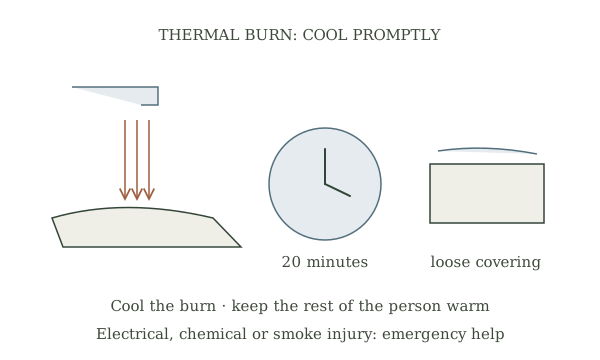
Hold the burned area under cool running water for 20 minutes as soon as possible. Use a timer to keep track. Do not use ice, butter, oils or creams. Keep uninjured areas warm, especially with a child or a large exposure, and follow dispatcher guidance if cooling causes distress.
- 04
Cover the cooled area
After cooling, lay clean cling film loosely over the affected skin or use a clean non-adherent covering. Do not wrap film around a limb or place it over the face. Avoid adhesive directly on injured skin. Leave blisters intact; opening them is not first aid.
- 05
Stay and monitor
Watch breathing, responsiveness and comfort while waiting for help. Report new breathing difficulty or reduced response immediately. Do not assume less pain means a mild burn. Keep access open for responders and tell them the cooling duration, source and any materials applied.
- 06
Follow care instructions
Obtain advice for uncertain burns and for young children rather than judging depth from a picture. Follow the clinician’s dressing and review plan. Restock supplies and correct the hot-water, cooking or equipment hazard. Rehearse the cooling route and phone access without applying heat to anyone.
Mistakes to avoid
- Using ice or household ointment
- Peeling away stuck clothing
- Wrapping a burned limb tightly
If it isn’t working
There is no running water
Use available cool clean water and seek dispatcher advice; do not delay emergency help while finding a perfect setup.
Breathing changes after smoke exposure
Call emergency services immediately and stay out of the hazardous area.
Then & now
Historical context
Modern first aid rejects butter, oil and similar household burn remedies. Cooling and appropriate dressings are paired with clinical assessment of depth, location and cause.
The modern equivalent
Prompt cool-water first aid and specialist assessment for burns that exceed minor care.
Sources & review
Editorial draft — specialist review pending. Written 2026-10-05. Sources support the stated scope; this page has not been professionally certified.
- NHS — Burns and Scalds ↗
Twenty-minute thermal-burn cooling, stuck clothing, loose film and emergency referral. Checked 2026-10-05.
- American Red Cross — Burns ↗
Burn causes, scene hazards, monitoring and first-aid limits. Checked 2026-10-05.