Why it matters
Sweet corn needs effective wind pollination and an appropriate block or planting plan; squash needs room and insect pollination. Combining them can be useful but does not erase each crop's distinct requirements.
What you’ll need
Tools
- Seed packets
- Trowel
- Watering can
Materials
- Adapted sweet corn and squash seed
- Well-prepared soil
Before you begin
Safety & limits
- Use locally appropriate seed and planting dates. Check labels before using any garden input; wash harvested produce and follow local food-safety guidance.
Work carefully, in order
The method
- 01
Choose types and space
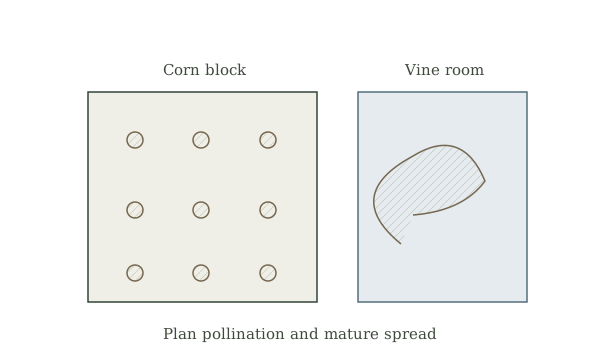
Select a sweet corn variety and a summer or winter squash with enough season to mature. Review actual mature spread and corn pollination requirements before drawing the bed.
- 02
Plan the layout
Follow local extension guidance for a corn block or other effective pollination layout. Give squash a separate clear path where vines will not smother young corn or block access.
- 03
Plant in warm conditions
Sow after frost risk and according to packet depth and spacing. Soil temperature matters; do not transplant squash carelessly because roots can be damaged.
- 04
Observe flowering
Recognize corn tassels and silks and squash male and female flowers. Protect pollinator habitat and note poor set, pest damage or drought instead of relying on a companion-planting promise.
- 05
Harvest and note
Pick sweet corn and summer squash at their intended eating stage; winter squash has different maturity and curing guidance. Record planting pattern and harvest to refine the next layout.
Mistakes to avoid
- Following a date from a different climate without checking soil and weather
- Crowding plants beyond the variety's stated spacing
- Treating every yellow leaf as a need for more fertilizer
If it isn’t working
Growth stalls
Check soil moisture, recent temperature and the crop's preferred season before changing fertilizer.
Leaves show damage
Identify the pest or disease with local extension guidance rather than applying an unverified treatment.
Then & now
Historical context
Indigenous milpa systems developed sophisticated corn, bean and squash relationships; a home garden should credit that tradition and adapt varieties to local conditions.
The modern equivalent
Current extension guides and locally adapted cultivars add measured soil, climate and pest information to observation in the garden.
Sources & review
Editorial draft — specialist review pending. Written 2026-09-27. Sources support the stated scope; this page has not been professionally certified.
- UMN Extension — Growing sweet corn ↗
Crop-specific extension guidance; adjust timing and cultivar to the local season. Checked 2026-09-27.
- UMN Extension — Growing summer squash and zucchini ↗
Crop-specific extension guidance; adjust timing and cultivar to the local season. Checked 2026-09-27.
- UMN Extension — Companion planting ↗
Crop-specific extension guidance; adjust timing and cultivar to the local season. Checked 2026-09-27.