Why it matters
Fire permission, weather, site design and a complete extinguishing plan govern this skill. Match lighting is only a short part of a safely attended fire.
What you’ll need
Tools
- Matches
- Water
- Shovel or stirring tool
Materials
- Locally permitted fire ring
- Dry local fuel
Before this skill
- fire-triangle
- natural-tinder
Before you begin
Safety & limits
- Check current local restrictions before striking a match. Use an existing approved ring, stay with the fire and never use accelerants. Keep water available for full extinguishment.
Work carefully, in order
The method
- 01
Check permission and conditions
Read current land-manager rules and fire restrictions. If the site, wind or available water is unsuitable, skip the fire entirely.
- 02
Prepare the established ring
Clear nearby loose combustibles as permitted, look above for branches, and place water and a stirring tool within reach. Do not improvise a new ring where prohibited.
- 03
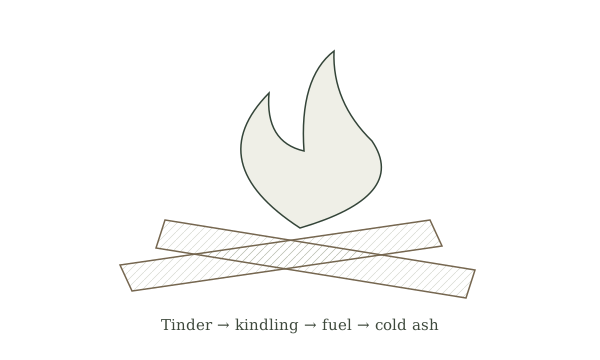
Lay a modest fire
Arrange approved dry tinder and small fuel with air spaces, keeping the arrangement small. Have larger wood ready without surrounding the flame with a dense pile.
- 04
Strike and tend
Light with a match from a stable position, put the spent match fully into the fire or water, and add small fuel gradually. Never leave it unattended or add liquid fuel.
- 05
Finish cold
Stop adding wood early. Drown, stir, drown and check the ashes and coals for heat using the current site guidance; do not leave a warm ring.
Mistakes to avoid
- Lighting before checking restrictions
- Building an oversized lay
- Walking away from apparently spent coals
If it isn’t working
Fuel smokes without catching
Stop and check dryness and air spaces; do not add accelerant.
Wind rises or embers escape
Stop tending, alert others and follow the site's emergency instructions.
Then & now
Historical context
Matches made repeatable ignition possible, but traditional firecraft also depended on dry fuel and patient tending.
The modern equivalent
A regulated camp stove can be a lower-impact option where permitted, but it has its own fuel and carbon monoxide rules.
Sources & review
Editorial draft — specialist review pending. Written 2026-09-27. Sources support the stated scope; this page has not been professionally certified.
- National Park Service — Campfires ↗
Supporting reference; follow the original and local rules for complete instructions. Checked 2026-09-27.
- Smokey Bear — Campfire safety ↗
Supporting reference; follow the original and local rules for complete instructions. Checked 2026-09-27.
- US EPA — Best Wood-Burning Practices ↗
Supporting reference; follow the original and local rules for complete instructions. Checked 2026-09-27.