Why it matters
Clarification, filtration and microbial disinfection do different jobs. This guide’s bounded worked method is a measured boiling-and-cooling demonstration using potable practice water. A real field source first needs the collection and hazard screen. The aim is a completed process log with protected storage, not a universal claim that boiling makes every water source safe.
What you’ll need
Tools
- Stable stove and heat-safe pot used exactly as instructed
- Clock or timer
- Dedicated collection vessel and clean receiving container
- Altitude information
Materials
- Potable water for the demonstration
- Safe outdoor cooking station away from shelter fabric
- Manufacturer instructions for optional filter/disinfectant
Before you begin
Safety & limits
- Reject suspected harmful chemical, toxin or radioactive contamination. Boiling or disinfecting will not make it safe.
- Operate stoves only as instructed, outside enclosed shelter and away from combustible material. The hot-water step needs competent supervision and burn precautions.
- Do not improvise a disinfectant dose or contact time. Follow the exact product, water volume, temperature and turbidity instructions.
Work carefully, in order
The method
- 01
Choose the process before handling water
Read the collection record and exclude suspect chemical sources. For this supervised practice choose boiling, use potable tap water and record the actual site elevation. Keep the full demonstration outside shelter fabric on a stable heat-safe cooking station. The example bottle is marked PRACTICE; no one needs to consume raw stream water to learn the sequence.
- 02
Clarify when needed, then keep water untreated
For a real suitable microbial-treatment candidate that is cloudy, follow the chosen official guidance for clarification before boiling. Settling or cloth straining only addresses suspended matter. Keep the collection vessel on the dirty side and the receiving vessel on the clean side. The potable practice water needs no artificial muddying; observe the clean/dirty distinction using labels and separate surfaces.
- 03
Bring the water to a rolling boil
Measure a volume that fits the pot and record it; the demonstration can use 500 mL if the pot and stove allow. Heat until an active rolling boil is present throughout the water, not merely a few edge bubbles. CDC specifies 1 minute at a rolling boil, or 3 minutes above 6,500 feet. Start the timed interval only when that condition is reached; log elevation and start/end.
- 04
Cool without recontaminating
Turn off the stove as instructed, keep the pot protected and allow it to cool before handling or drinking. Do not add raw water, dirty ice or a used collection scoop to accelerate cooling. Use a clean food-grade bottle and lid; keep its mouth and inner lid surface off dirty gear. Transfer only when the water and container are compatible with safe handling.
- 05
Understand the alternative’s separate controls
When boiling is unavailable, CDC favors filtration followed by disinfection. Read the exact filter’s microbial claims, maintenance and damage/freeze limits, then the exact disinfectant label. Do not translate a filter’s cyst claim into a virus claim or invent a chlorine/tablet dose. Log the two completed operations separately. If instructions or equipment condition are uncertain, use a known safe supply or change the trip.
- 06
Inspect the complete practice record
Give another learner the source screen, volume, elevation, boil interval, cooling and storage log. They check that timing began at a rolling boil and that the clean bottle was protected. A simulated dirty-outlet contact invalidates the clean transfer: follow manufacturer cleaning guidance before proceeding. Completion shows the method was followed; it does not measure chemical removal or certify an untested field source.
Mistakes to avoid
- Starting the timer while the pot is only warming
- Assuming clearer or better-tasting water has been disinfected
- Treating a filter alone as protection against every microorganism
- Adding untreated water to the cooled batch
If it isn’t working
The stove runs out before the full interval
The recorded process is incomplete. Use a known safe supply or another fully instructed method; do not round the elapsed time up.
The filter has frozen, been damaged or lost its instructions
Follow the manufacturer’s integrity/replacement instructions and use the independent backup. Normal flow or clear output does not demonstrate an intact barrier.
Then & now
Historical context
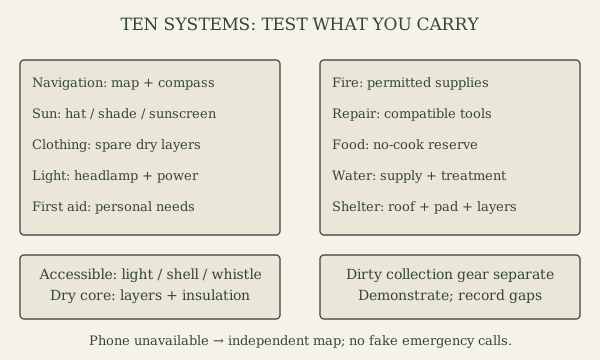
The Mountaineers’ Pacific Northwest preparedness tradition, formalized in print in 1974, includes a drinking-water system. The separate collection and treatment logs here adapt that preparedness idea to current CDC microbial controls. Earlier clear-water or taste judgments cannot replace those controls.
The modern equivalent
A regulated safe supply or verified bottled water is preferable when treatment capability is uncertain.
Sources & review
Editorial draft — specialist review pending. Written 2026-10-06. Sources support the stated scope; this page has not been professionally certified.
- CDC — Water treatment when hiking, camping or traveling ↗
Microbial treatment, rolling-boil duration and elevation adjustment, filter limitations and chemical-contamination exclusions. The practice log is an editorial example; no improvised chemical dose is supplied. Checked 2026-10-06.
- NPS — Two Ways to Purify Water ↗
Field boiling, cooling and separation of filtration/disinfection; read full guidance and equipment instructions. The demonstration does not treat chemically suspect water. Checked 2026-10-06.
- The Mountaineers — What Are the Ten Essentials? ↗
Pacific Northwest climbing-course origins in the 1930s and formal publication in 1974; historical context only. Checked 2026-10-06.