Why it matters
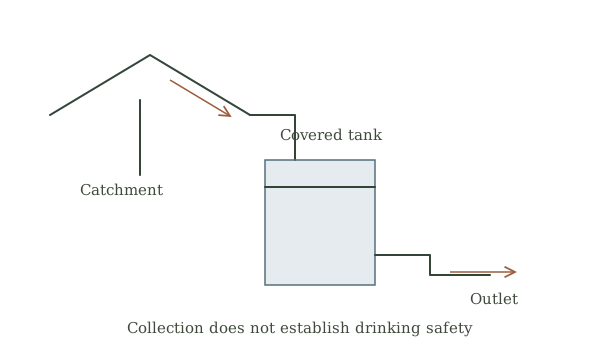
A larger tank stores more water but also adds structural load, access, contamination and overflow questions. Storage is not treatment; a cistern needs a use-specific water-quality plan.
What you’ll need
Tools
- Site sketch
- Inspection record
Materials
- Existing tank information
- Local code and manufacturer instructions
Before this skill
- rainwater-collection
Before you begin
Safety & limits
- Do not enter a cistern: confined spaces can be deadly. A qualified designer must assess foundations, load, overflow, backflow protection and permitted use. Collected water is not automatically drinkable.
Work carefully, in order
The method
- 01
Map the flow
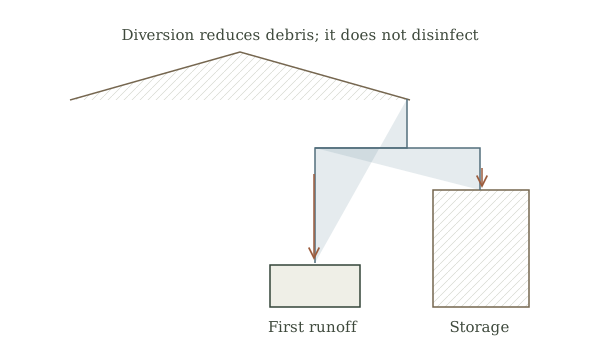
On a drawing identify catchment, screen, diversion, inlet, sealed storage, vent, draw-off and overflow. Show where water goes during heavy rain and when the tank is full.
- 02
Check the protected envelope
From outside, note whether lids close securely and vents and overflows exclude insects and animals. Do not remove covers or lean over openings.
- 03
Separate the uses
Label a nonpotable irrigation route distinctly from any drinking-water system. Never connect the two without code-compliant backflow protection by a qualified professional.
- 04
Review siting and loads
Ask a designer to check tank support, soil, freeze and flood exposure, service access and safe overflow drainage before purchase or alteration.
- 05
Set an inspection schedule
Follow the manufacturer and local health authority for screens, sediment, water quality and any disinfection. Record changes in odor, color or system condition for qualified follow-up.
Mistakes to avoid
- Treating a sealed tank as sterile
- Ignoring overflow erosion
- Entering a tank to clean it
If it isn’t working
Mosquitoes or animals can enter
Stop use and arrange safe repair of screens and closures.
Overflow undermines support
Stop use and seek a drainage and structural assessment.
Then & now
Historical context
Covered underground and above-ground cisterns have supplied homes and farms for centuries, often with settling and regular cleaning.
The modern equivalent
Modern tanks can use engineered covers, inlet screens, sensors and treatment, with regular inspection still required.
Sources & review
Editorial draft — specialist review pending. Written 2026-09-27. Sources support the stated scope; this page has not been professionally certified.
- CDC — Collecting Rainwater and Your Health ↗
Supporting reference; consult the original and current local requirements for complete guidance. Checked 2026-09-27.
- US EPA — Rainwater Harvesting Practices ↗
Supporting reference; consult the original and current local requirements for complete guidance. Checked 2026-09-27.