Why it matters
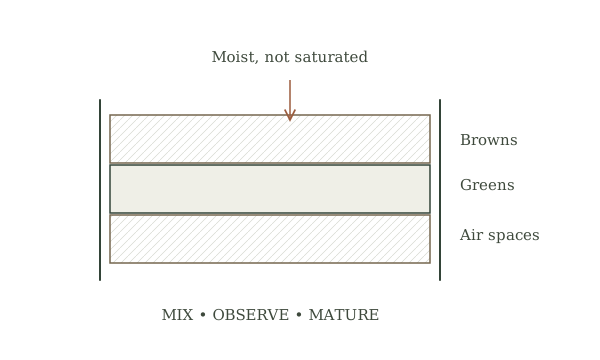
A compost heap is a habitat for decomposers. Dense wet material excludes air; very dry material limits biological activity. Browns and greens describe useful tendencies, not a precise laboratory recipe. The goal is a workable mixture that you can observe and adjust.
What you’ll need
Tools
- Garden fork
- Watering can
- Thermometer
Materials
- Dry leaves
- Fresh plant trimmings
Before you begin
Safety & limits
- Use gloves and wash hands. Do not inhale dusty or moldy material.
Work carefully, in order
The method
- 01
Choose the working space
Place the bin where a fork and watering can are easy to use. Leave room beside it for turning and a separate container for dry leaves. Keep access clear in wet weather; a beautiful bin that is difficult to reach will be neglected.
- 02
Mix contrasting materials
Combine chopped dry leaves with fresh trimmings and vegetable scraps. Break up grass mats and distribute scraps within the mixture. Avoid meat, dairy, pet waste, diseased plants, and persistent weeds in a basic home heap.
- 03
Check moisture and air
Squeeze a handful with gloves: it should feel damp without streaming water. Add dry coarse material if it is soggy; add water gradually if dusty. Turn compacted areas so the interior has air rather than merely rearranging the surface.
- 04
Watch the process
Note dates, temperature, smell, and what you added. A hot pile and a slow cool pile both decompose material, but a home pile is not automatically a validated pathogen or weed-seed treatment. Do not interpret warmth as proof of sanitation.
- 05
Recognize the finish
Let the batch mature without adding fresh scraps. Finished material should be crumbly and earthy with most original ingredients no longer recognizable. Set coarse pieces aside for the next batch. Trial a little around established plants before using a large amount.
Mistakes to avoid
- Layering thick wet grass
- Continually mixing fresh waste into a supposedly finished batch
- Treating compost as a complete fertilizer
If it isn’t working
Sour smell
Break up wet clumps and mix in dry bulky leaves.
No change
Check dryness and small pile size; allow more time in cool weather.
Then & now
Historical context
Gardeners long returned plant residues to the soil; modern composting makes moisture and aeration easier to manage deliberately.
The modern equivalent
A managed municipal composting service can handle materials unsuitable for a small home heap.
Sources & review
Editorial draft — specialist review pending. Written 2026-09-20. Sources support the stated scope; this page has not been professionally certified.
- University of Minnesota — composting ↗
Supporting reference; see the original for its complete procedure. Checked 2026-09-20.