Why it matters
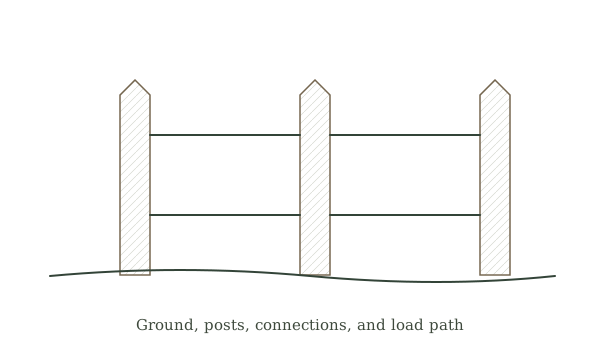
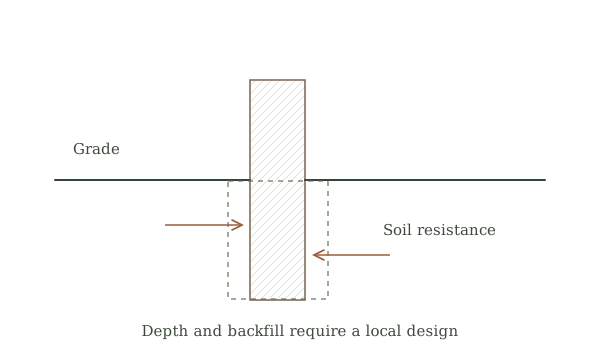
A post transfers fence forces into the ground. Depth and backfill cannot be specified responsibly without knowing soil, height, exposure, and loading. A gravel layer is not a universal drain: in impermeable ground it can become a small water-filled sump.
What you’ll need
Tools
- Post-hole tools
- Level
- Tape measure
Materials
- Ground-contact-rated post
- Site-specific backfill
Before you begin
Safety & limits
- Locate utilities before digging. Retaining structures, tall fences, gates, and difficult ground need qualified design.
Work carefully, in order
The method
- 01
Resolve constraints first
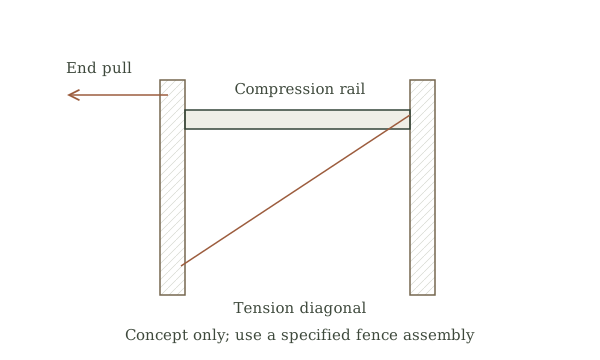
Confirm boundaries, permissions, buried utility locations, and local requirements before digging. Identify whether the post is a line, corner, or gate post. Gate and tension posts carry substantially different forces from a lightly loaded garden line post.
- 02
Choose a local detail
Use a fence supplier’s or qualified local designer’s detail for your fence and ground conditions. Check frost depth, post rating, hole dimensions, and backfill. Do not copy an attractive cross-section without its design assumptions.
- 03
Lay out carefully
Set a string line clear of the excavation, mark spacing, and measure gate openings with actual hardware allowances. Make a written record of intended heights. Correcting a layout before excavation is easier than moving a set post.
- 04
Excavate and set
Use appropriate tools on stable ground and keep spoil from falling back into the hole. Do not enter an excavation. Position the post with temporary support and check plumb in two directions while placing the specified backfill in the prescribed manner.
- 05
Allow and inspect
Observe any curing requirements before attaching or tensioning fencing. Shape the finished surface so it does not funnel water down the post. Recheck alignment after the fence is installed and after seasonal ground movement.
Mistakes to avoid
- Using one burial depth everywhere
- Assuming gravel guarantees drainage
- Tensioning wire before the support is ready
If it isn’t working
Post tilts after loading
Release the unsafe load and assess foundation and bracing.
Water ponds at base
Review grading and the local installation detail.
Then & now
Historical context
Traditional post construction varied with soil and timber availability; durable examples do not establish universal dimensions.
The modern equivalent
Engineered post systems can provide documented capacities for known conditions.
Sources & review
Editorial draft — specialist review pending. Written 2026-09-20. Sources support the stated scope; this page has not been professionally certified.
This entry describes general practice. A topic-specific source review is still required before it can be marked reviewed.
How this manual handles evidence →