Why it matters
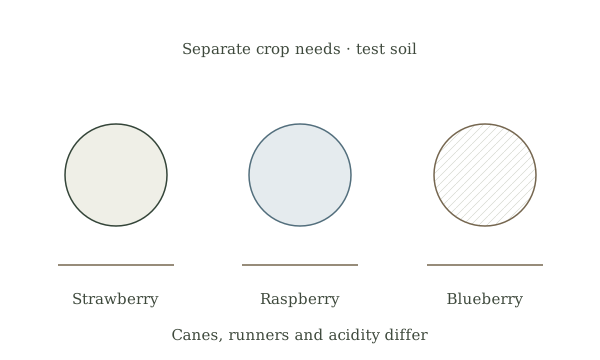
Strawberries, raspberries, and blueberries have different root habits, pruning cycles, and soil requirements. Blueberries in particular need an acidic soil that should be verified and adjusted deliberately. A small planting matched to the site is more useful than mixing crops into a bed with incompatible care.
What you’ll need
Tools
- Soil test kit or laboratory service
- Trowel
- Notebook
Materials
- Locally adapted plants
- Mulch
- Plant labels
Before you begin
Safety & limits
- Use correctly identified edible nursery stock; do not eat unidentified wild berries.
- Follow local pesticide labels and keep children away from treated plants.
Work carefully, in order
The method
- 01
Choose one crop and cultivar
Compare local extension lists for climate hardiness, fruiting season, disease resistance and pollination needs. Select strawberries, raspberries, or blueberries according to the available bed and care time. Decide whether a cane support, runner-management area, or separate acidic bed is needed.
- 02
Test and prepare the site
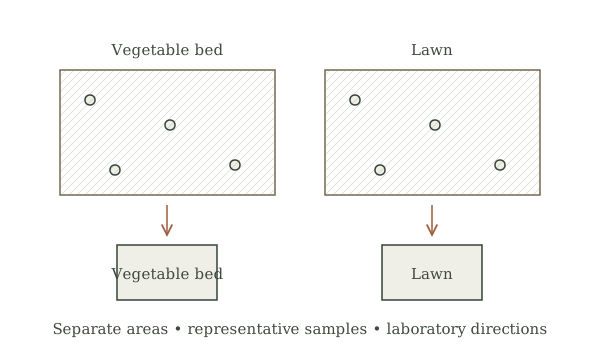
Observe full sun, drainage and water access; get a soil test before changing pH or applying fertilizer. Blueberries have a different acidity requirement from many garden crops. Address persistent wetness through site choice rather than burying roots in a waterlogged bed.
- 03
Plant according to species
Follow local instructions for depth, spacing and timing for the chosen species and nursery stock. Keep plant crowns or root flares at the correct level, water in, label cultivars and planting date, and place mulch as advised without covering sensitive crowns.
- 04
Manage growth and harvest
Keep weeds down, irrigate consistently without saturating roots, and monitor ripening. For raspberries, learn whether the cultivar fruits on first-year or second-year canes before removing any; for strawberries, manage runners; for blueberries, monitor soil pH over time.
- 05
Observe problems and renew
Record fruit quality, weather, pest and disease symptoms, and plant vigor. Remove visibly diseased material with clean tools and follow crop-specific sanitation guidance. Revisit soil tests and decide whether declining plants need a corrected site, renovation or replacement rather than an unmeasured fertilizer dose.
Mistakes to avoid
- Treating all berries as one crop
- Changing blueberry soil pH without a test
- Removing raspberry canes before identifying fruiting habit
If it isn’t working
Blueberry leaves yellow between veins
Test soil and irrigation water conditions before adding nutrients or acidifiers.
Raspberry patch spreads into paths
Use local cane-management and edging advice, and remove unwanted suckers while keeping healthy fruiting wood.
Then & now
Historical context
Berry patches provided seasonal fresh food close to the home, with local varieties and propagation matched to soil and winter conditions.
The modern equivalent
Lab soil testing and locally bred cultivars improve planting decisions.
Sources & review
Editorial draft — specialist review pending. Written 2026-09-27. Sources support the stated scope; this page has not been professionally certified.
- UMN Extension — growing blueberries ↗
Supporting reference; consult the original for species and local details. Checked 2026-09-27.
- UMN Extension — growing strawberries ↗
Supporting reference; consult the original for species and local details. Checked 2026-09-27.
- UMN Extension — growing raspberries ↗
Supporting reference; consult the original for species and local details. Checked 2026-09-27.