Why it matters
A habitat pile is deliberately retained cover, not simply an excuse to leave waste anywhere. Its purpose and location should be clear before you add material. In a small garden, keeping an existing safe woody feature may be more useful than building something new.
What you’ll need
Tools
- Gloves
- Notebook
- Camera
Materials
- Clean untreated local woody prunings
Before you begin
Safety & limits
- Do not burn an established habitat pile. Keep away from structures and ignition sources according to local fire guidance. Avoid disturbing nests or handling wildlife.
Work carefully, in order
The method
- 01
Decide whether a pile belongs here
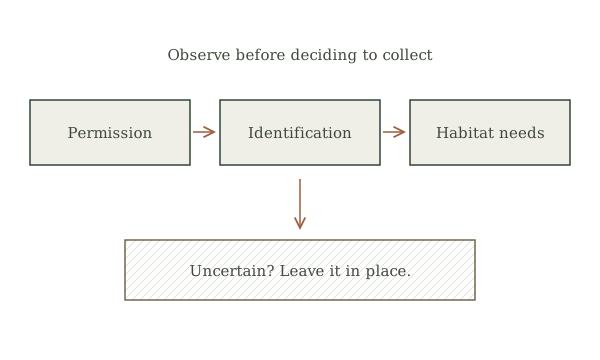
Consider the animals you hope to support, the available space and how the location will be managed. Consult local wildlife advice for appropriate habitat in your area. Check fire guidance, access needs and nearby buildings. If the site cannot safely retain woody material, choose another habitat feature instead.
- 02
Choose a quiet permanent position
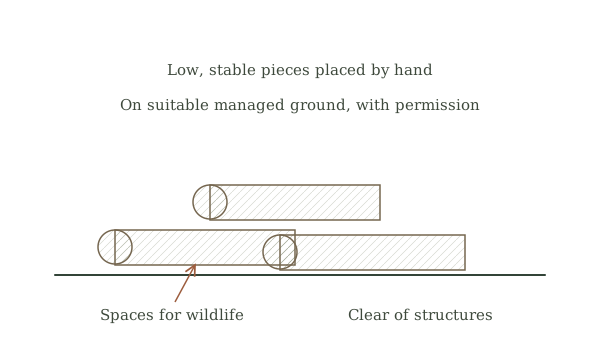
Use a place on managed land where the material can remain without blocking drainage, paths or routine work. Keep the feature separate from a burn pile or material scheduled for removal. Mark its purpose on your garden plan. Do not build habitat structures on public land without explicit permission.
- 03
Select modest material
Use clean, untreated pieces already available from appropriate garden work. Reject nails, wire, painted scraps and suspect invasive or diseased plant material. Use pieces you can place comfortably by hand; this guide does not cover moving heavy logs. Do not strip a woodland of deadwood to decorate a garden.
- 04
Arrange for stability and retreat
Keep the feature low and stable, with small sheltered spaces rather than a tall precarious stack. Place material gently without disturbing existing occupants. Leave access around it for observation. This is an ecological feature, not a climbing structure, seat, retaining wall or engineered shelter for people.
- 05
Observe without dismantling
Record the location and take occasional photographs from the same viewpoint. Watch for use without repeatedly turning pieces over. If the pile later conflicts with necessary work, seek suitable timing and local wildlife guidance before moving it. A feature that is constantly rebuilt provides little continuity of shelter.
Mistakes to avoid
- Building a refuge where it will soon be burned or cleared
- Importing unknown woody material
- Using a tall unstable pile as a garden feature
If it isn’t working
No animals are visible
Lack of a sighting does not establish absence. Observe quietly and review the surrounding habitat rather than dismantling the feature.
Material blocks a path
Reassess the location and obtain local advice about moving potentially occupied habitat safely.
Then & now
Historical context
Useful material need not always be extracted. Retaining some woody residue recognises another role for it in a managed landscape.
The modern equivalent
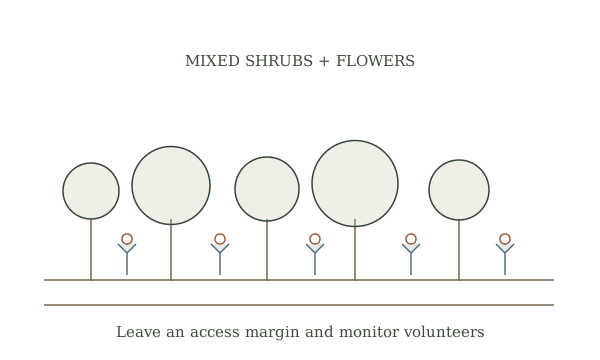
A habitat plan can combine retained wood with native planting and other local recommendations; bought wildlife products are not a requirement.
Sources & review
Editorial draft — sources checked; specialist review pending. Written 2026-09-20. Sources support the stated scope; this page has not been professionally certified.
- Royal Horticultural Society — wildlife gardening ↗
Habitat gardening and examples of log piles and structures made from prunings; not a structural design. Checked 2026-09-20.