Why it matters
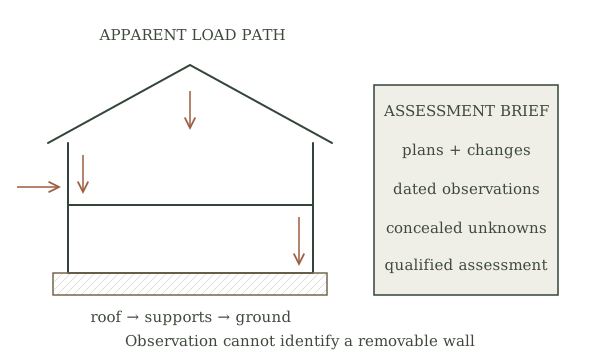
A shelf transfers its own weight and stored weight through brackets and fixings into the wall. A screw that feels tight does not establish capacity. The complete system, sound substrate and actual use must agree before anything is loaded.
What you’ll need
Tools
- Tape measure
- Level
- Stud and service detector
- Drill and bits specified for the verified substrate
- Suitable driver
- Eye protection
Materials
- Complete shelf and bracket system with instructions
- Substrate-specific fixings selected for the system
- Pencil and contents-weight record
Before you begin
Safety & limits
- Check permission before drilling. Establish the wall construction and concealed-service risks; a detector alone cannot guarantee a safe drilling point. Unknown walls, heavy loads, overhead locations or damaged substrates need qualified assessment. This guide gives no universal anchor size or load rating.
Work carefully, in order
The method
- 01
Describe the intended load
Weigh the objects you intend to store and include the shelf itself. Decide where people will stand or sleep beneath it, whether children could pull on it and whether access encourages climbing. Choose a safer location or freestanding storage if the proposed use cannot be supported by a documented wall system.
- 02
Verify the wall and services
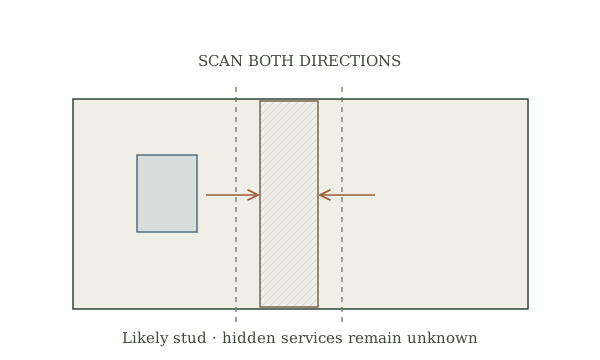
Use available building information and the Finding Studs guide to establish the substrate and proposed fixing locations. Check for concealed cables and pipes before drilling; scan the whole work area and consider nearby fixtures. Stop when construction, services or the condition of the wall remains uncertain.
- 03
Match all components
Read the instructions for the exact shelf, brackets and fixings together. Confirm required bracket count, spacing, engagement and substrate conditions. Select fixings for the actual wall with qualified help where needed. Do not transfer a capacity claim from a different bracket arrangement or an anchor package to the complete shelf.
- 04
Mark and mount the brackets
With the shelf unloaded, mark the specified fixing pattern using a level. Recheck the measurements and service clearance. Drill, clean holes and secure brackets only as the selected system directs, avoiding excessive tightening. Do not enlarge an unsuccessful hole and substitute whatever plug happens to fit.
- 05
Secure the shelf and load carefully
Attach the shelf to its brackets with all required retainers or screws. Confirm that every specified connection is present before adding contents. Place the documented contents evenly and remain within the complete system limit. Do not test the shelf by hanging from it or adding a large trial load.
- 06
Inspect after installation
Record the system and allowed contents. Look for movement, pulled fixings, cracking, sagging or dampness during routine use and after contents change. Remove contents safely if movement appears and obtain assessment. Keep access practical so the shelf never becomes a step or climbing aid.
Mistakes to avoid
- Treating a tight screw as proof of strength
- Omitting shelf retainers
- Using an anchor rating as a whole-system rating
If it isn’t working
The shelf moves
Remove contents without standing beneath the shelf and stop use until the wall and complete installation are assessed.
The wall type is unclear
Pause drilling and ask a qualified installer to identify a suitable fixing system or choose another storage arrangement.
Then & now
Historical context
Wall shelves made useful storage in small rooms. Modern bracket systems document component combinations, while the building still determines suitable anchorage.
The modern equivalent
A documented wall-storage system installed for its substrate and intended load; freestanding storage may suit an uncertain wall.
Sources & review
Editorial draft — specialist review pending. Written 2026-10-05. Sources support the stated scope; this page has not been professionally certified.
- IKEA — Wall Shelves Buying Guide and Wall Anchoring Guide ↗
Wall-dependent fixings, component selection and shelf-system requirements; example systems are not universal specifications. Checked 2026-10-05.