Why it matters
A convenient washing area can prevent soil-covered containers from crossing clean preparation space. The design must also keep wash water, dirty tools and clean produce apart. A simple dry run reveals crossings before the station is used for food.
What you’ll need
Tools
- Notebook and layout sketch
- Cleaning tools
- Clean produce brush, where suitable
Materials
- Verified potable water supply
- Food-safe cleanable table and containers
- Separate handwashing provision
- Approved drainage or wastewater collection arrangement
Before you begin
Safety & limits
- Use potable water for household produce washing, not untreated rainwater or surface water. Do not apply soap or household surface sanitizers to produce. Plumbing connections need suitable backflow protection and qualified assessment. Keep electricity away from wet work and avoid slippery drainage paths. Farm or commercial use requires a separate food-safety plan.
Work carefully, in order
The method
- 01
Define the limited use
Write that this station is for small household produce batches, not raw meat processing or a shared recirculating wash tank. Identify which crops are washed immediately and which remain unwashed until preparation according to storage guidance. Mark the destination for clean produce.
- 02
Verify water and drainage
Confirm the water supply is potable and the connection is suitable for the intended use. Ask a qualified installer about backflow protection if connecting equipment. Plan where wastewater goes before positioning the table; avoid pooling, soil splash and unapproved discharge. Do not let a hose outlet sit in dirty water.
- 03
Lay out one-way handling
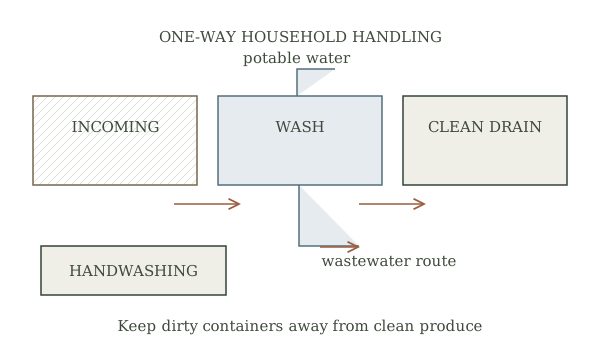
Place incoming soil-covered containers at one end, washing in the middle and clean draining containers at the other end. Provide separate handwashing access. Choose surfaces that can be cleaned without hidden dirt traps. Keep tools, animals and garden chemicals away from the clean side.
- 04
Run the route without produce
Use empty labelled containers to rehearse arrival, washing, draining and movement indoors. Check whether a hose or dirty container crosses the clean zone. Adjust the layout until clean items remain protected and the operator can move safely without stepping through wastewater.
- 05
Clean and wash small batches
Clean and, where appropriate, sanitize food-contact surfaces using labelled instructions, then wash hands. For household produce, use cool running potable water and crop-appropriate gentle rubbing or a clean brush. Keep dirty batches separate; do not repeatedly reuse the same wash water or add surface chemicals to produce.
- 06
Drain, move and reset
Drain into clean containers and move produce to its appropriate preparation or storage conditions. Empty wastewater through the planned route, clean the equipment and let it dry. Protect stored clean containers from dust and animals. Record water concerns or cross-contamination incidents before the next use.
Mistakes to avoid
- Letting a dirty hose or crate cross the clean side
- Using collected rainwater for produce washing
- Confusing surface sanitizer with a produce-wash product
If it isn’t working
Water ponds under the station
Stop use and correct the approved drainage arrangement; do not redirect contaminated runoff into a vegetable bed.
Water quality is uncertain
Use a verified potable source in a clean alternative location until the supply has been assessed.
Then & now
Historical context
Outdoor washing areas reduced dirt carried into the house. Modern food-hygiene practice adds verified water quality, cleanable surfaces and clear separation of dirty and clean handling.
The modern equivalent
A cleanable household wash station; commercial wash/pack facilities require validated farm-specific controls.
Sources & review
Editorial draft — specialist review pending. Written 2026-09-30. Sources support the stated scope; this page has not been professionally certified.
- University of Minnesota Extension — Washing Fresh Fruits and Vegetables Safely ↗
Household produce washing, clean surfaces and preventing cross-contamination. Checked 2026-09-30.
- University of Minnesota Extension — Wash/Pack Design Ideas ↗
Wash/pack surfaces and equipment layout; farm-specific examples are not a domestic plumbing specification. Checked 2026-09-30.