Why it matters
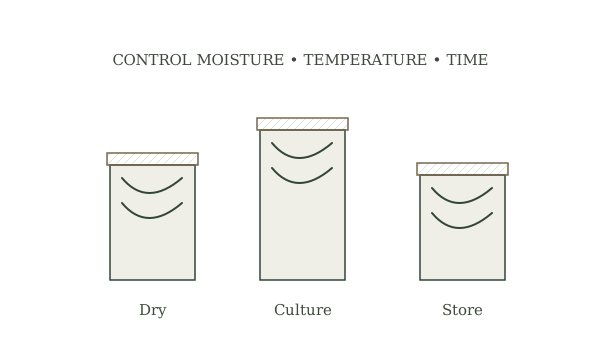
A root cellar slows deterioration without making food shelf-stable in the canning sense. Different crops need different conditions. Potatoes need darkness; onions need drier storage than many roots. One damp room is not a universal pantry.
What you’ll need
Tools
- Thermometer
- Hygrometer
- Notebook
Materials
- Clean crates
- Sound storage crops
Before you begin
Safety & limits
- Root cellars are not refrigerators for meat or dairy. Underground construction and confined spaces need qualified assessment.
Work carefully, in order
The method
- 01
Assess the existing space
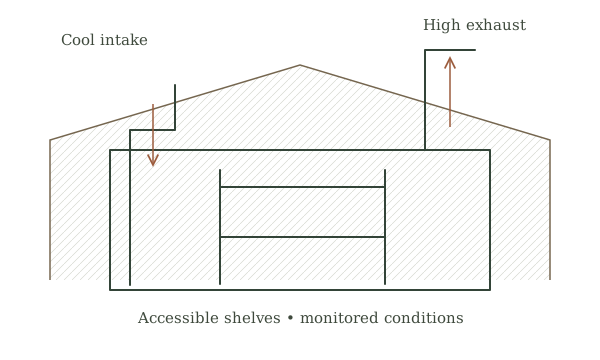
Use a safe accessible room, not an improvised excavation. Record temperature and humidity over several days and after weather changes. Check water ingress, rodents, ventilation, and whether the space contains fuel or chemicals.
- 02
Separate crop requirements
Consult crop-specific extension storage guidance for your varieties and climate. Group compatible produce rather than storing everything together. Keep apples apart from crops affected by their ripening gases and keep onions in a suitably dry ventilated zone.
- 03
Sort before storing
Use only sound produce for longer storage. Separate bruised or cut items for prompt appropriate use. Follow each crop’s curing and preparation needs; washing every crop before storage is not automatically helpful.
- 04
Arrange for inspection
Use manageable shallow containers with labels showing crop and date. Keep aisles open and crates off damp surfaces. Avoid a huge inaccessible pile where one rotting item can affect many others before being noticed.
- 05
Inspect and adjust
Check regularly for condensation, shriveling, soft spots, pests, and freezing. Remove spoiled items without tasting them. Record changes and shorten storage expectations when the room cannot hold the required conditions. Refrigeration or another method may be more suitable.
Mistakes to avoid
- Storing all crops at one humidity
- Hiding damaged produce deep in a pile
- Assuming a cellar is safe because it is cool
If it isn’t working
Roots shrivel
Check crop-specific humidity and airflow.
Condensation collects
Review ventilation and temperature swings without letting produce freeze.
Then & now
Historical context
Cool storage relied on local climate and architecture. Historic cellars worked differently across regions and seasons.
The modern equivalent
A controlled refrigerator or purpose-designed cold room offers tighter conditions.
Sources & review
Editorial draft — specialist review pending. Written 2026-09-20. Sources support the stated scope; this page has not been professionally certified.
This entry describes general practice. A topic-specific source review is still required before it can be marked reviewed.
How this manual handles evidence →