Why it matters
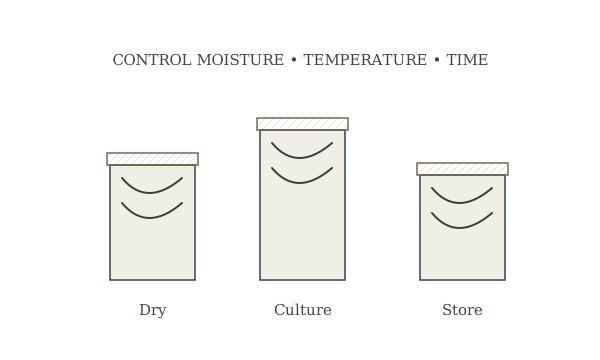
Shredded cabbage releases liquid when mixed with the right amount of salt. Keeping the cabbage below that liquid supports the intended fermentation, while the recipe’s temperature and observation instructions matter just as much as the initial preparation. Working from one complete published process prevents a plausible-looking crock from standing in for validated directions.
What you’ll need
Tools
- Clean food-grade fermentation container
- Scale or measures required by the recipe
- Suitable plate and weight or specified cover
- Room thermometer
Materials
- Firm fresh cabbage
- Canning or pickling salt
- Clean cloth or cover as specified
Before this skill
- Kitchen Hygiene
- Measuring Salt for Vegetable Fermentation
Before you begin
Safety & limits
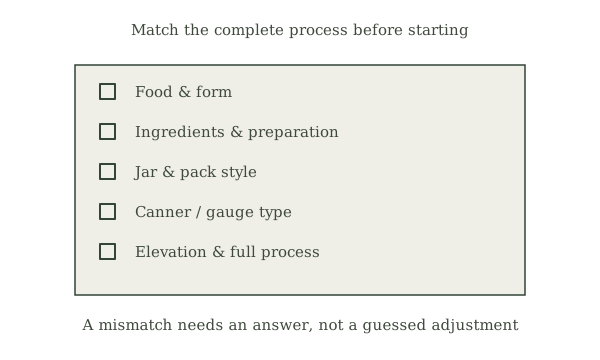
- Read and follow the entire NCHFP sauerkraut recipe, including its exact salt quantity, container setup, temperature guidance and storage options. This article is an annotated overview, not a replacement recipe.
- Do not improvise a reduced-salt or tightly sealed jar process. Fermentation produces gas; use a cover arrangement described by the source.
- Discard batches that develop objectionable spoilage signs and seek extension advice for uncertainty. A pleasant smell or appearance is not a safety test.
Work carefully, in order
The method
- 01
Choose and read the source
Open the NCHFP Sauerkraut instructions and the linked guidance for suitable containers and weights. Choose a batch size covered by the source; collect its specified ingredients and equipment. Decide in advance whether the fully fermented cabbage will be refrigerated or canned using the source’s separate processing table.
- 02
Prepare the cabbage and salt
Select firm fresh heads; remove outer leaves and cores and shred as the source describes. Weigh the prepared cabbage for the selected batch and measure its required canning or pickling salt. Mix the salt uniformly as each portion is prepared. Do not substitute an untested “handful per jar” estimate.
- 03
Pack below the liquid
Work the cabbage into the container in layers, pressing until juice rises. Keep the cabbage below its brine with a source-approved plate and weight or brine-filled bag. If juice does not cover it, consult the source’s specified supplemental-brine instructions. Maintain the headspace and cover arrangement given in the complete process.
- 04
Watch the conditions and change
Keep the container in the source’s recommended temperature range and out of inappropriate heat. Observe it in the manner required for the chosen weight and cover. Normal fermentation evolves over weeks; a cold room changes its pace. Record temperature and observations instead of deciding completion solely from the calendar or a single bubble.
- 05
Store by a supported method
When the source indicates fermentation is complete, use its covered-refrigeration guidance or its separate tested canning process for the chosen pack style, jar size and elevation. Do not call a room-temperature crock indefinitely shelf-stable, and do not skip the canning table merely because the cabbage has become sour.
Mistakes to avoid
- Changing the salt without a tested low-salt sauerkraut process.
- Leaving shredded cabbage exposed above its liquid.
- Taking a canning time from another vegetable, jar size or pack style.
If it isn’t working
The cabbage is not releasing enough liquid
Check the complete NCHFP recipe for its specified supplement; do not pour in plain water or estimate a brine strength.
A room is outside the recommended temperature range
Move the container to a suitable location before proceeding and consult the source; fermentation schedules and quality may change.
Then & now
Historical context
Sauerkraut grew from methods of preserving cabbage through the cool season. Historical crocks and household taste tests show the craft’s reach, but inherited instructions may omit measurements or suitable storage conditions. Current extension guidance offers documented steps that can be repeated.
The modern equivalent
The NCHFP published recipe supplies ingredient amounts and a distinct canning table; refrigerator storage is an option for properly completed kraut. A ready-made cultured product is also available when suitable conditions cannot be maintained.
Sources & review
Editorial draft — specialist review pending. Written 2026-09-24. Sources support the stated scope; this page has not been professionally certified.
- NCHFP — sauerkraut ↗
Complete recipe, monitoring, temperature guidance and storage and canning alternatives. Checked 2026-09-24.
- NCHFP — suitable fermenting containers and weights ↗
Food-contact vessel selection and keeping produce beneath brine. Checked 2026-09-24.