Why it matters
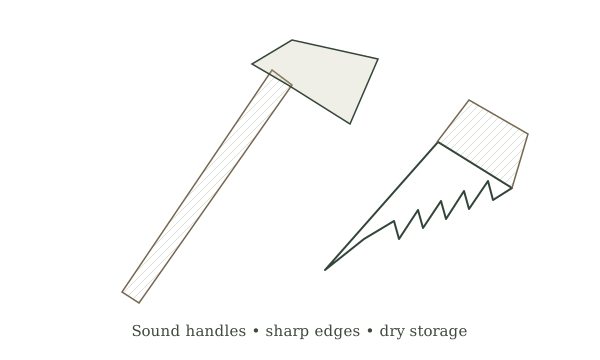
An axe edge must suit chopping or splitting loads. Removing too much supporting metal can weaken it. Sharpening is therefore a shape-preservation task, beginning with inspection of the whole tool rather than the edge alone.
What you’ll need
Tools
- Vise with protective jaws
- Handled file
- Axe stone
Materials
- Edge guard
Before you begin
Safety & limits
- Powered grinders can overheat edges and create additional hazards; this entry covers controlled hand maintenance.
Work carefully, in order
The method
- 01
Inspect and classify
Check head security, handle condition, cracks, and edge damage. Determine whether the tool is a chopping axe, hatchet, or splitting tool. A badly chipped edge or loose head needs assessment before sharpening begins.
- 02
Secure the head
Clamp the tool firmly without damaging it and position the edge so the file can move in a controlled path. Fit a proper file handle. Keep hands clear of the edge and wear suitable eye protection against metal particles.
- 03
Maintain the profile
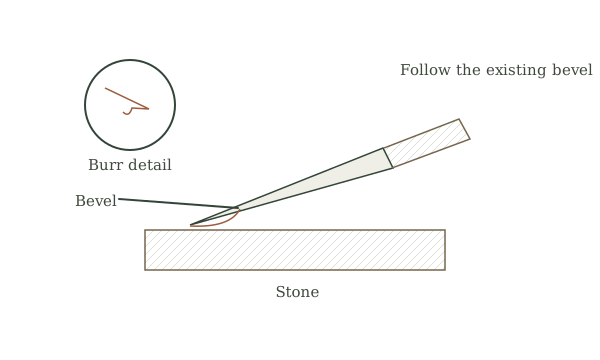
Follow the maker’s edge shape using smooth file strokes in the file’s cutting direction. Remove only the metal needed to restore the working edge. Compare both sides frequently rather than working one side down excessively.
- 04
Refine the edge
Use an appropriate axe stone as instructed, with fingers kept behind protective features where provided. Remove the burr with lighter passes. Do not seek an exceptionally thin edge simply because it feels sharper during a bench test.
- 05
Protect and evaluate
Clean away filings, protect bare metal, and fit the sheath before moving the tool. Recheck head and handle. In the next controlled work session, assess cutting behavior; repeated chipping suggests geometry, technique, or steel damage needs attention.
Mistakes to avoid
- Grinding away too much supporting metal
- Using a file without a handle
- Ignoring a loose head
If it isn’t working
Edge chips again
Stop and check geometry and material condition.
File skates
Check whether the file is suitable and sharp; do not force it.
Then & now
Historical context
Axe profiles varied with timber and task, so preserving the existing useful shape mattered more than one universal bevel.
The modern equivalent
A competent sharpening service is appropriate for major damage.
Sources & review
Editorial draft — specialist review pending. Written 2026-09-20. Sources support the stated scope; this page has not been professionally certified.
This entry describes general practice. A topic-specific source review is still required before it can be marked reviewed.
How this manual handles evidence →