Why it matters
Unlike running stitch, back stitch fills the gaps between visible stitches. Its overlapping thread path makes a useful seam for small repairs. Consistent spacing and modest tension matter more than tiny stitches pulled as tight as possible.
What you’ll need
Tools
- Needle
- Scissors
- Fabric marker
Materials
- Thread
- Two fabric scraps
Work carefully, in order
The method
- 01
Mark a practice line
Align two scraps and mark a straight seam line. Secure them with a few pins placed safely away from the needle path. Choose thread and needle suitable for the fabric rather than forcing a thick needle through delicate cloth.
- 02
Anchor and emerge
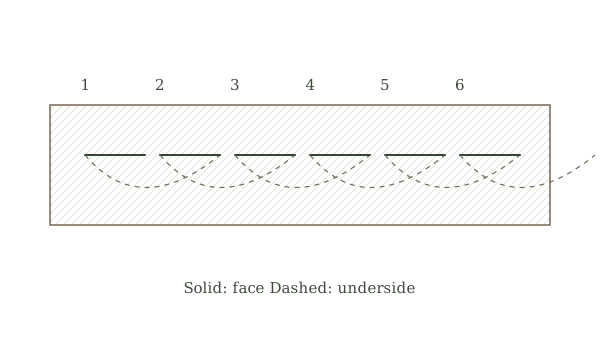
Secure the thread at the beginning. Bring the needle up one stitch length ahead of the start. Put it down at the start, then bring it up one stitch length beyond the point where it first emerged.
- 03
Fill the gap
Insert the needle back into the end of the previous visible stitch. Emerge the same distance ahead again. Each cycle goes backward on the face and farther forward underneath, producing a continuous line on top.
- 04
Control tension
Pull until the thread sits against the cloth without puckering it. Pause every few stitches and flatten the fabric. Keep stitch length consistent, making smaller stitches only where curves or strain require control.
- 05
Finish the seam
Secure the end with small stitches in the seam allowance and trim. Open the joined scraps and inspect both sides. Tug gently across the seam to identify gaps or damaged fabric before applying the technique to clothing.
Mistakes to avoid
- Pulling until the seam puckers
- Changing stitch length unintentionally
- Catching only one layer
If it isn’t working
Fabric gathers
Loosen tension and practice on a new line.
Visible gaps remain
Return to the previous stitch endpoint precisely.
Then & now
Historical context
Back stitch provided a durable seam before sewing machines and remains useful where a machine cannot reach.
The modern equivalent
Machine lockstitch is faster for long seams; hand back stitch works in small awkward repairs.
Sources & review
Editorial draft — specialist review pending. Written 2026-09-20. Sources support the stated scope; this page has not been professionally certified.
This entry describes general practice. A topic-specific source review is still required before it can be marked reviewed.
How this manual handles evidence →