Why it matters
A bowline creates a loop that does not cinch in the same way as a running noose. Its working end forms a collar around the standing part. It can loosen under some conditions, so knowing its shape is not the same as qualifying it for a critical load.
What you’ll need
Tools
- Practice rope
Materials
- Unloaded practice space
Before you begin
Safety & limits
- Practice only. Do not use this tutorial for climbing, rescue, animal restraint, or suspending people.
Work carefully, in order
The method
- 01
Name the parts
Lay a manageable length of rope on a table. The standing part is the long section; the working end is the short end you manipulate. Reserve generous rope for the finished loop and enough tail to inspect the knot clearly.
- 02
Make the small loop
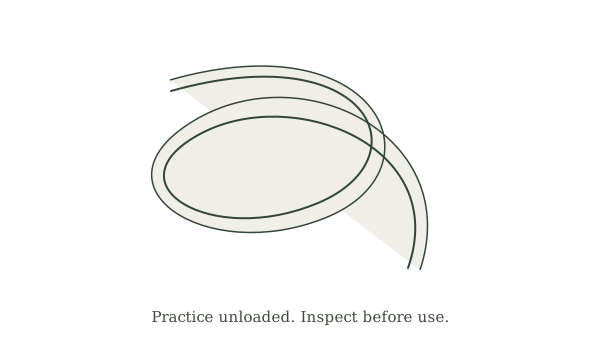
Form a small loop in the standing part, noting which strand crosses above the other. Keep that crossing in place. Bring the working end up through the small loop to begin forming the large fixed loop.
- 03
Make the collar
Lead the working end around the standing part and back down through the same small loop. It should travel around the standing part, not around a strand of the large loop. Pause and trace the entire path with your eyes.
- 04
Dress the knot
Arrange the strands neatly and tighten all relevant parts gradually. The small loop should capture the collar, while the large loop remains the intended size. Leave a generous visible tail and compare with a trusted finished-knot diagram.
- 05
Practice and inspect
Load only by hand in this exercise, then untie and repeat from a different orientation. If the shape changes unexpectedly or the tail draws through, stop and retie. Learn appropriate alternatives and security measures in proper training before any consequential application.
Mistakes to avoid
- Wrapping the wrong strand
- Leaving a tiny tail
- Assuming the knot cannot shake loose
If it isn’t working
Loop slides smaller
Check that you tied a bowline rather than a running loop.
Knot looks different reversed
Trace the standing part and collar instead of relying on a silhouette.
Then & now
Historical context
The bowline belongs to longstanding seamanship and utility-rope traditions.
The modern equivalent
Purpose-made straps are often better for securing modern cargo; climbing systems need their own training.
Sources & review
Editorial draft — specialist review pending. Written 2026-09-20. Sources support the stated scope; this page has not been professionally certified.
- Animated Knots — bowline structure and limitations ↗
Supporting method and limitations. Consult the complete source before practice. Checked 2026-09-20.