Why it matters
A coop manages moisture, manure, predators, and access. It is not just a small house. Daily cleaning and observation need enough working space that you can reach every corner without crawling through dirty bedding.
What you’ll need
Tools
- Tape measure
- Sketchbook
Materials
- Coop plan
- Predator-resistant mesh
Before you begin
Safety & limits
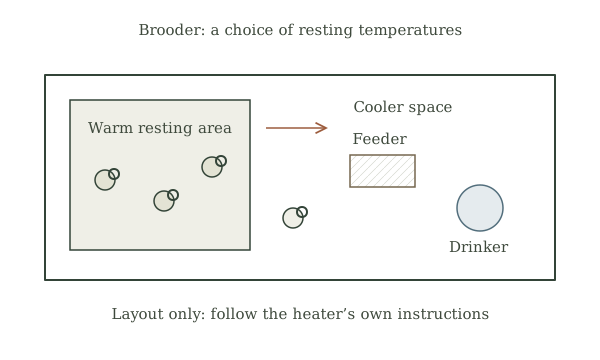
- Wash hands after poultry contact. Keep coop shoes and equipment out of kitchens. Heat sources require professional fire-safe installation.
Work carefully, in order
The method
- 01
Map the daily circuit
Draw where you enter, refill water, remove bedding, and collect eggs. Set the layout at human scale before choosing decorative features. Make doors wide enough for your cleaning tools and leave room to isolate new or unwell birds elsewhere.
- 02
Separate uses
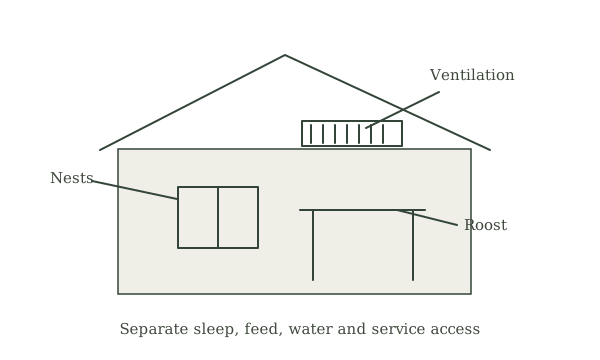
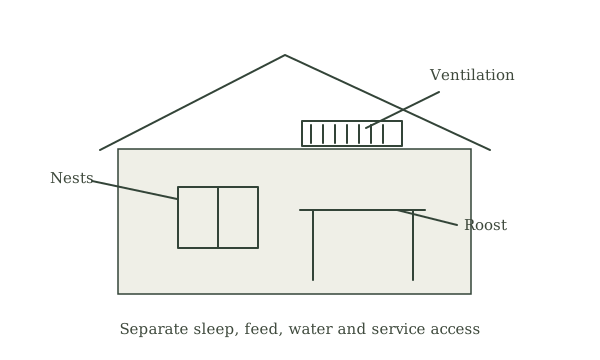
Provide suitable roosts and quieter nest boxes away from the main traffic route. Place water where splashing cannot soak bedding beneath the sleeping area. Check stocking space for the breed, climate, and time spent indoors with local poultry guidance.
- 03
Provide air without exposure
Plan protected ventilation high in the coop, with shelter from direct drafts across roosting birds. Look for condensation and damp litter during use. Closing every opening in winter can trap moisture; insulation is not a replacement for air exchange.
- 04
Check every boundary
Inspect roof, floor, mesh connections, door gaps, and digging access around the run. Choose hardware appropriate to local predators. Chicken wire contains birds but should not be assumed to exclude determined predators. Latches must remain reliable after dirt and weather.
- 05
Test the routine
Walk through a morning and evening check before birds arrive. Schedule bedding removal and feeder cleaning, then observe the flock daily. Revise the layout if subordinate birds cannot reach resources or if servicing requires leaving the run unsecured.
Mistakes to avoid
- Sealing ventilation to conserve heat
- Putting roosts over food or water
- Choosing appearance before cleaning access
If it isn’t working
Damp bedding returns quickly
Find leaks, splashing and inadequate airflow.
Birds crowd one corner
Check drafts, light, access, and social pressure.
Then & now
Historical context
Poultry housing has ranged from shared farm buildings to dedicated coops; sanitation and predator control determine whether a design works.
The modern equivalent
A well-designed manufactured coop can help, but advertised bird counts need scrutiny.
Sources & review
Editorial draft — specialist review pending. Written 2026-09-20. Sources support the stated scope; this page has not been professionally certified.
- University of Minnesota — raising chickens ↗
Supporting reference; see the original for its complete procedure. Checked 2026-09-20.
- CDC — backyard poultry ↗
Supporting reference; see the original for its complete procedure. Checked 2026-09-20.