Why it matters
A newly hatched chick depends on a suitable environment while it develops. The useful skill is noticing the whole group: where chicks rest, whether each can drink, and whether the bedding stays dry. A working heater alone does not demonstrate that the setup is suitable.
What you’ll need
Tools
- Brooder thermometer
- Purpose-made chick feeder and drinker
- Notebook
Materials
- Commercial chick starter
- Suitable clean bedding
- Purpose-made electric brooder
Before you begin
Safety & limits
- Keep poultry and their equipment outside the home in a suitable protected outbuilding. Wash hands after contact. CDC advises that children under five should not touch poultry; older children need supervision.
- Follow the heater manufacturer’s installation, clearance and electrical instructions. Do not improvise a heat lamp over combustible bedding. Breathing trouble, inability to stand, persistent distress or unexplained deaths need prompt veterinary advice.
Work carefully, in order
The method
- 01
Prepare before collecting chicks
Confirm the hatchery’s care instructions, vaccination history and suitable starter feed. Identify a poultry veterinarian before there is a problem. Clean the empty enclosure and equipment, use an appropriate disinfectant exactly as labeled, and let everything dry. Make a written checklist for heat, water, feed, bedding and the person responsible for checks.
- 02
Test the complete brooder
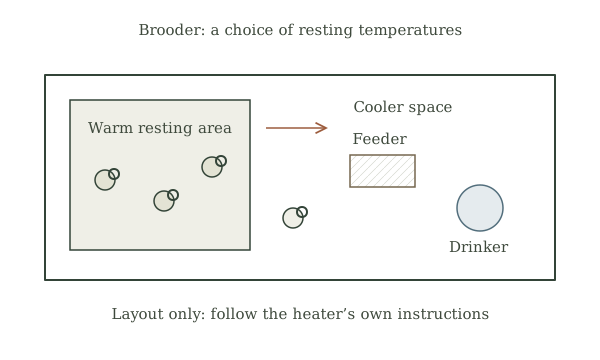
Run the installed brooder before arrival. Provide a warm resting area and accessible cooler space; chicks must be able to move between them. Follow the particular device’s settings: an air-temperature target for a lamp is not automatically a setting for a contact heating plate. Place the thermometer as its instructions require and check the arrangement at chick level.
- 03
Make feed and water easy to reach
Have fresh water and complete chick starter ready on arrival. Use chick-sized equipment rather than a deep open water container. Watch individuals find both resources and check that smaller birds can reach them. Keep water spills away from the resting area. Record the feed product so a relief keeper buys the same appropriate ration.
- 04
Observe before adjusting
Watch quietly before handling anything. Persistent crowding near warmth can indicate cold; avoidance can indicate too much heat. Uneven grouping may reveal a draft. Check the equipment and room conditions before making a small adjustment, then observe again. A weak individual needs attention even when the rest appear comfortable; do not assume every problem is temperature.
- 05
Plan for growth
Remove wet litter promptly and check drinkers repeatedly, especially after refilling. Keep a dated note of behavior, feed changes and any losses. Expand the usable area and adjust heat according to development, weather and equipment guidance. Arrange the next secure housing stage in advance; moving growing chicks into an adult flock is a separate introduction task.
Mistakes to avoid
- Using one room reading as proof of chick comfort.
- Allowing wet bedding to accumulate beneath a leaking drinker.
If it isn’t working
One chick remains apart
Check access to warmth and water, protect it from trampling, and contact the poultry veterinarian if it is weak or abnormal.
The group crowds one corner
Check for drafts, excessive heat elsewhere or disturbance. Correct the environment without closing off ventilation.
Then & now
Historical context
Broody hens provide warmth and protection. Artificial brooders transfer those responsibilities to the keeper; a nostalgic wooden box is not a complete brooding system.
The modern equivalent
Purpose-made brooders simplify heat control, but daily observation and a backup care arrangement remain necessary.
Sources & review
Editorial draft — specialist review pending. Written 2026-09-21. Sources support the stated scope; this page has not been professionally certified.
- University of Minnesota Extension — raising layer chicks and pullets ↗
Brooder preparation, feed, water and observing chick distribution. Checked 2026-09-21.
- CDC — backyard poultry ↗
Human hygiene, children and keeping poultry outside the home. Checked 2026-09-21.
- USDA APHIS — Defend the Flock ↗
Biosecurity and recognizing the need for professional help. Checked 2026-09-21.