Why it matters
Pasteurization reduces pathogens in milk, yet the finished product still needs refrigeration. Raw milk can contain dangerous germs even when animals look healthy and the milk seems fresh; cold storage cannot turn it into pasteurized milk.
What you’ll need
Tools
- Refrigerator thermometer
- Clean cooler with cold packs
- Marker
Materials
- Sealed pasteurized milk or dairy product
- Clean serving container
Before this skill
- Kitchen Hygiene
Before you begin
Safety & limits
- Avoid serving raw milk or foods made from it as a safe substitute for pasteurized dairy. Follow local requirements and seek qualified guidance for any dairy processing.
- Do not leave perishable dairy unrefrigerated beyond current official limits. After a power loss, use the official chart for the exact product; smell and taste cannot verify safety.
Work carefully, in order
The method
- 01
Check the product
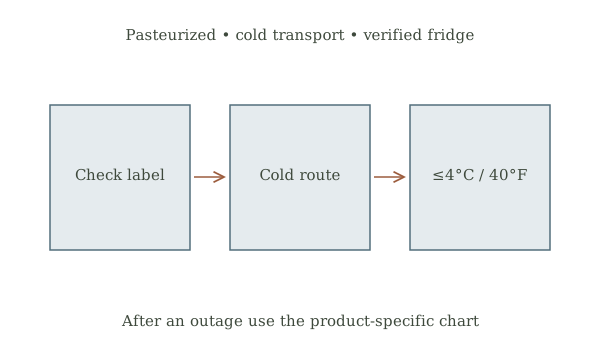
Read the label for pasteurization, storage and use-by directions. Keep the container sealed during transport and choose a cold route home rather than leaving dairy in a warm vehicle.
- 02
Verify refrigeration
Use an appliance thermometer to confirm that the refrigerator stays at or below 4°C / 40°F. Store the milk promptly, close the container and prevent spills or contact with raw-food juices.
- 03
Serve cleanly
Wash hands and use clean cups or utensils. Pour only what is needed, promptly return the main container to refrigeration and avoid pouring leftover served milk back into the original package.
- 04
Respond to a lapse
If the refrigerator loses power or dairy has warmed, check elapsed time and the FoodSafety.gov product table. Discard when directed; do not rely on boiling, fermentation, taste or appearance to reset an uncertain cold chain.
Mistakes to avoid
- Treating a clean-looking raw milk source as a safety guarantee.
- Storing milk on a warm door shelf without checking the appliance.
- Using taste to decide whether warmed dairy is safe.
If it isn’t working
The refrigerator thermometer reads above 4°C / 40°F
Correct the appliance problem and apply official time-and-temperature guidance to affected products.
A label does not identify pasteurization
Ask the producer or seller before serving; choose a clearly labeled pasteurized product while status is uncertain.
Then & now
Historical context
Milking, cooling and culturing were central homestead practices. Today's pasteurization, appliance thermometers and dairy-specific guidance distinguish safe everyday handling from advanced processing.
The modern equivalent
Pasteurized labeled products, an appliance thermometer and a cooler replace uncertain handling by touch or smell.
Sources & review
Editorial draft — specialist review pending. Written 2026-09-24. Sources support the stated scope; this page has not been professionally certified.
- FDA — The Dangers of Raw Milk ↗
Why unpasteurized milk and its products can carry pathogens. Checked 2026-09-24.
- FoodSafety.gov — 4 Steps to Food Safety ↗
Refrigeration at or below 4°C / 40°F and prompt chilling. Checked 2026-09-24.
- FoodSafety.gov — Food Safety During Power Outage ↗
Product-specific discard decisions after refrigerator power loss. Checked 2026-09-24.


