Why it matters
A gate concentrates weight and repeated movement at one opening. A latch adjustment may hide a leaning post, an undersized hinge or ground movement. The useful skill is to identify where the geometry changed before replacing hardware or forcing a misaligned latch.
What you’ll need
Tools
- Level
- Tape measure
- Notebook
- Hinge manufacturer instructions
Materials
- Temporary gate restraint
- Compatible replacement hardware if needed
Before you begin
Safety & limits
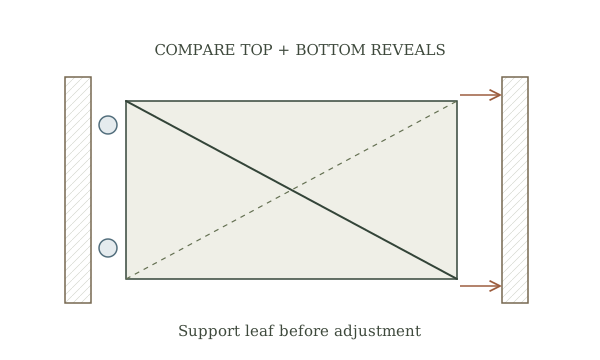
- Keep people and animals clear of a gate that may swing or fall. Support a heavy leaf before loosening hinges; obtain help for lifting.
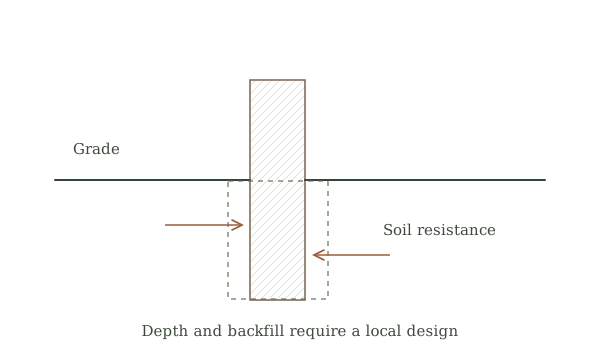
- Do not cut, excavate or force a loaded gate post. A leaning gate post or strained livestock gate needs a competent repair plan.
Work carefully, in order
The method
- 01
Make the opening safe
Secure the gate against unexpected swing and move animals to a sound enclosure if this gate is part of their perimeter. Photograph the closed position and note where it rubs: latch edge, bottom rail or hinge edge. Do not work beneath an unsupported heavy leaf.
- 02
Measure the gap
Check level at the gate and plumb at both posts. Measure the reveal at top and bottom and the ground clearance across the swing. Repeat with the gate open to see whether the leaf sags independently or the whole post moves with it.
- 03
Trace the support
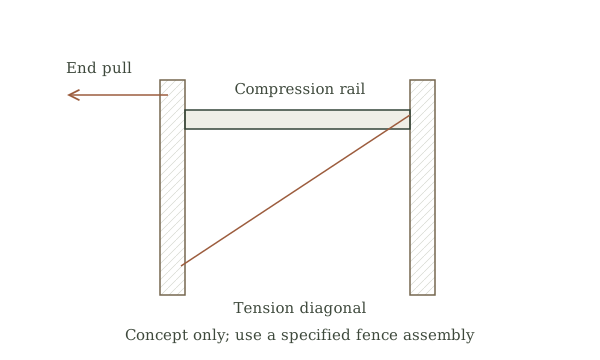
Inspect hinge fasteners, backing wood, straps, diagonal brace and latch hardware for looseness, rot or deformation. A sound leaf with a shifting post calls for post or foundation repair, not a tighter latch. Compare actual hardware with its intended gate weight.
- 04
Adjust within the hardware instructions
For a sound, supported leaf and stable posts, make small reversible adjustments using the hinge maker’s instructions. Retighten only into sound material with compatible fasteners. Stop if a screw spins, a post shifts or a brace is cracked; arrange a proper repair.
- 05
Test and record
Cycle the gate slowly several times without anyone in the swing arc. Confirm secure latching, safe clearance and no new binding through the full arc. Recheck after weather or livestock pressure, and record measurements so progressive movement is visible.
Mistakes to avoid
- Moving the latch to disguise a leaning post
- Loosening hinges on an unsupported heavy gate
- Assuming ground clearance is the same along the entire swing
If it isn’t working
Gate still rubs after hinge adjustment
Recheck post plumb and leaf bracing; do not keep shifting the latch until the load path is understood.
Fastener will not hold
Stop using the opening as an animal barrier and assess the timber and hardware with a qualified repairer.
Then & now
Historical context
Farm gates used simple hinges and braces, but their durability depended on the support and load path as much as the leaf itself.
The modern equivalent
Adjustable rated gate hardware and documented post assemblies make diagnosis more repeatable.
Sources & review
Editorial draft — specialist review pending. Written 2026-09-28. Sources support the stated scope; this page has not been professionally certified.
- Penn State Extension — Fencing ↗
Fence types, intended livestock use and maintenance. Checked 2026-09-28.
- University of Minnesota Extension — Fall and spring pasture to-do lists ↗
Fence inspection before grazing. Checked 2026-09-28.