Why it matters
Pressing extracts liquid; it does not kill pathogens. Contamination on fruit can reach the juice, and a clear-looking bottle is not evidence of pasteurization or shelf stability.
What you’ll need
Tools
- Clean food-contact press
- Clean collection vessel
- Refrigerator thermometer
- Labels
Materials
- Sound identifiable fruit
- Potable wash water
Before this skill
- Kitchen Hygiene
Before you begin
Safety & limits
- Do not use dropped or visibly damaged apples for juice; follow the linked university guidance. Unpasteurized juice can cause serious illness, especially in vulnerable groups.
- Do not bottle or store pressed juice as shelf stable without a current, complete, product-specific validated process. Commercial sale has additional local requirements.
Work carefully, in order
The method
- 01
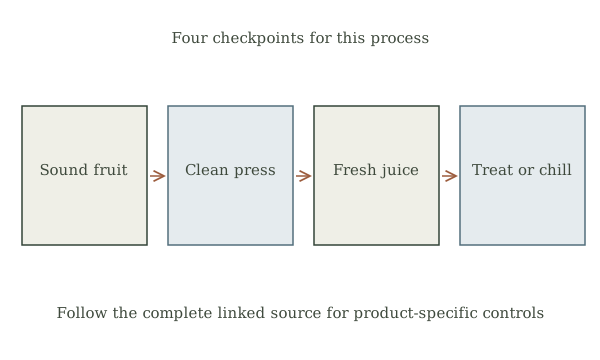
Choose sound fruit
Identify the crop and inspect every lot. Exclude rotten, moldy and damaged fruit; follow the University of Minnesota advice about fallen apples rather than assuming washing removes their contamination.
- 02
Prepare the press
Use potable water to wash suitable fruit as directed by current produce guidance. Clean and sanitize food-contact parts according to the equipment instructions; keep collection vessels protected from raw-food contact.
- 03
Press and separate
Operate the press within its manufacturer’s capacity, collecting juice in clean food-grade vessels. Label it as fresh unpasteurized juice unless a verified treatment has actually been completed; straining alone does not pasteurize it.
- 04
Make the storage decision
Use a complete approved juice treatment or preservation method if the goal is a product for later storage. Otherwise promptly refrigerate according to current guidance and do not claim an unspecified shelf life or serve uncertain unpasteurized juice.
Mistakes to avoid
- Pressing windfall apples into drinking juice.
- Treating filtering or fermentation as pathogen elimination.
- Putting fresh juice in a sealed room-temperature bottle.
If it isn’t working
Fruit quality is mixed
Sort again and discard suspect fruit; a clean press cannot compensate for a bad lot.
The juice warmed or treatment is unknown
Use current official discard guidance; do not taste it or retroactively label it pasteurized.
Then & now
Historical context
Small presses traditionally turned seasonal fruit into juice and cider. Modern food-safety guidance makes fruit selection, equipment hygiene, treatment and refrigerated handling explicit.
The modern equivalent
Commercial pasteurized juice is a reliable ready-to-drink option; a household press requires clean handling and a separate validated storage decision.
Sources & review
Editorial draft — specialist review pending. Written 2026-09-24. Sources support the stated scope; this page has not been professionally certified.
- FDA — What You Need to Know About Juice Safety ↗
Unpasteurized juice risks and the limits of washing produce. Checked 2026-09-24.
- University of Minnesota Extension — Harvesting and Using Fallen Apples ↗
Why dropped apples should not go into cider or juice. Checked 2026-09-24.
- FoodSafety.gov — Four Steps to Food Safety ↗
Clean preparation and prompt refrigeration of perishable foods. Checked 2026-09-24.