Why it matters
A straight-looking stem can be twisted, rotten or too weak for a proposed load. Woodland thinning may yield useful small wood, but deciding what to fell belongs to a land plan. This guide works with permitted, already cut material rather than teaching tree felling.
What you’ll need
Tools
- Gloves
- Measuring tape
- Notebook
Materials
- Permitted, already cut poles
Before you begin
Safety & limits
- Do not fell standing trees or pull lodged stems for this exercise. Have a trained worker handle cutting and loaded material.
- These poles are not rated for a ladder, building, overhead support or animal enclosure. Check local collection permissions.
Work carefully, in order
The method
- 01
Define a low-risk purpose
Choose a garden row marker, plant label or light temporary guide. List the length, exposure and contact with soil. Do not scale an untested stake into a structural post simply because it feels rigid.
- 02
Check permission and origin
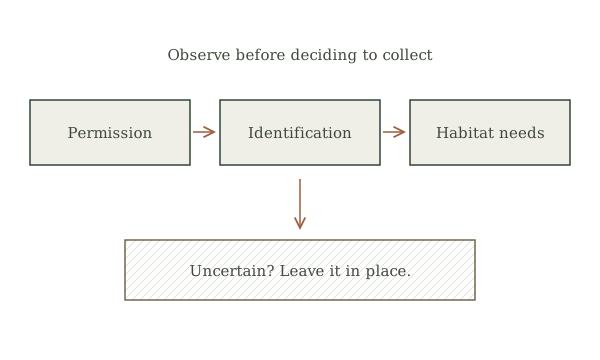
Use already cut material from your land or an authorized source. Ask whether the thinning or cleanup plan retains some deadwood for habitat and what rules govern removal. Avoid collecting living stems from a public woodland.
- 03
Inspect the whole pole
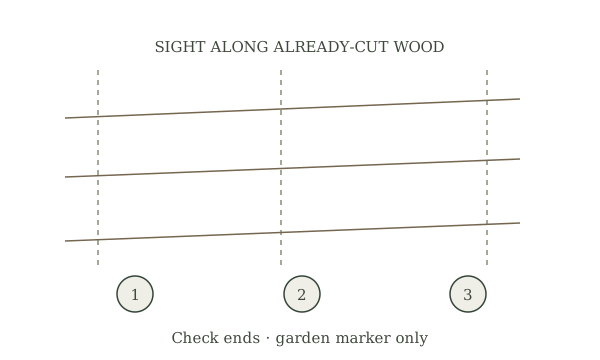
Sight along it for sweep and forked sections. Examine both ends for cracks, softness, insect galleries and changes in grain. Reject a pole with obvious damage for even a light task; do not trust an outer shell around a rotten core.
- 04
Sort and label
Group sound pieces by approximate size and intended use. Store them off wet ground where air can circulate, and mark any species identification as tentative. Different woods shrink, split and decay at different rates.
- 05
Recheck in use
Inspect the small stake after weather exposure for movement, splinters or decay. Replace it before it becomes a sharp or unstable obstruction. For fencing, trellises or loads, use a separate design and suitable rated materials.
Mistakes to avoid
- Cutting saplings without a stand plan
- Assuming straight means strong
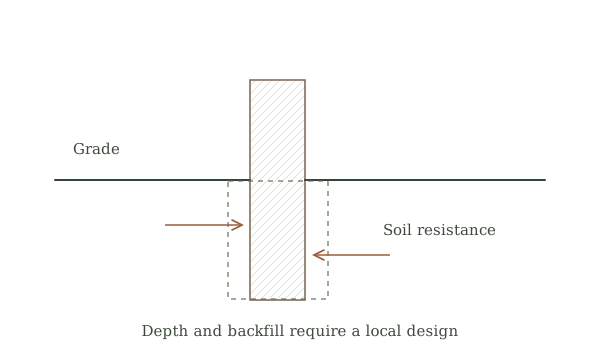
- Using a light garden stake as a structural post
If it isn’t working
The pole checks as it dries
Reserve it for a smaller non-load use or discard it; do not conceal a split in a support.
The end softens in soil
Replace the stake and consider a material intended for that exposure.
Then & now
Historical context
Small poles once served as temporary farm materials. Current woodland management weighs stand density, habitat, ownership and harvest rules before removing stems.
The modern equivalent
Sawn or graded stock provides more predictable dimensions and properties for designed projects.
Sources & review
Editorial draft — specialist review pending. Written 2026-09-28. Sources support the stated scope; this page has not been professionally certified.
- Oregon State University Extension — Small-scale harvesting for woodland owners ↗
Small woodland objectives, products and rules. Checked 2026-09-28.
- Oregon State University Extension — Thinning woodland property ↗
Small-diameter material within a managed thinning plan. Checked 2026-09-28.