Why it matters
Fresh meat and poultry are perishable. A practical workflow starts before the knife comes out: plan the trip home, reserve cold space and set aside equipment that will not touch ready-to-eat food. Product-specific refrigerator windows differ, so the current public-health chart is a better reference than an undated household rule.
What you’ll need
Tools
- Refrigerator thermometer
- Clean tray and raw-food cutting board
- Soap and clean towels
Materials
- Intact meat or poultry from a reliable supplier
- Leak-resistant container
- Batch label
Before this skill
- Kitchen Hygiene
- Using Food Thermometers
Before you begin
Safety & limits
- Keep raw meat and poultry at or below the refrigerator temperature in the current official guidance; promptly refrigerate or freeze after purchase. Refer to the FoodSafety.gov chart for the particular product.
- Keep raw juices away from cooked or ready-to-eat foods, wash hands and clean work surfaces between tasks. Use a food thermometer and the official product-specific cooking chart when cooking.
- Do not rinse raw poultry to make it safer; splashes can spread contamination. Never use smell or color as a sole safety test.
Work carefully, in order
The method
- 01
Plan the cold route
Before shopping, make space on a low refrigerator shelf and check the appliance thermometer. Buy perishables late in the trip, keep them separate from produce and ready-to-eat foods, and take them directly to a working refrigerator or freezer. If transport is extended, bring an insulated cooler that maintains the required cold conditions.
- 02
Inspect the package
Look for an intact wrapper, labeling, appropriate display temperature and a usable purchase or pack date. Place any package that could leak in a separate bag or tray. If it arrives warm, damaged or of uncertain handling history, do not assume later cooking or freezing will repair the uncertainty; consult the seller or discard it.
- 03
Store by the actual product
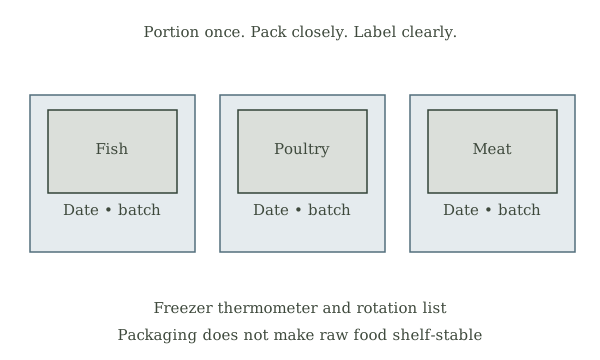
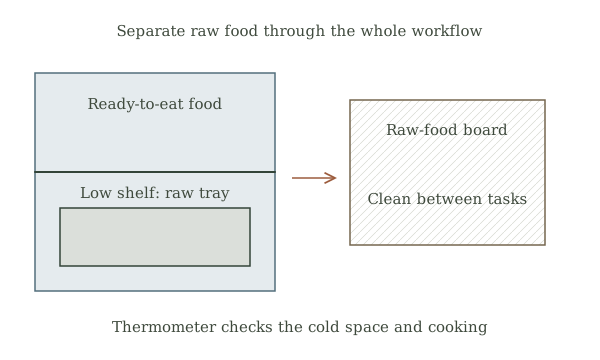
Label purchase date and what the package contains; place raw meat below ready-to-eat food in a leak-resistant tray. Use the official cold-storage chart for this species and form: ground meat and poultry have different short refrigerator windows from intact cuts. Freeze promptly if the plan extends beyond the appropriate window.
- 04
Prepare a clean workstation
Wash hands, prepare a dedicated board and knife, and work in manageable portions while keeping the rest cold. Protect food that will be eaten without cooking. Clean and sanitize as recommended between raw and ready-to-eat tasks; replace towels or utensils that have picked up raw juices rather than returning them to a clean area.
- 05
Cook or freeze with records
For a meal, use the government cooking-temperature chart and check the thickest relevant part with a clean food thermometer. For later use, wrap suitable portions and label them before freezing. If a batch’s handling or temperature history becomes uncertain, seek current food-safety guidance and do not treat a fresh-looking surface as reassurance.
Mistakes to avoid
- Storing a dripping package above salad or cooked food.
- Using one board for poultry and ready-to-eat food without cleaning.
- Applying the steak storage window to ground meat or poultry.
If it isn’t working
The package leaked in the refrigerator
Isolate it, clean affected surfaces and check any food it contacted; seek official advice on exposed ready-to-eat food rather than washing contamination away.
The refrigerator is too warm
Move food to verified cold storage and assess time and temperature against current official guidance; adjust or repair the refrigerator before relying on it.
Then & now
Historical context
Cool cellars, ice and salting were once central to meat handling, but temperature control was uncertain. Modern appliance thermometers, reliable refrigeration and published storage charts make it easier to keep each batch traceable.
The modern equivalent
A thermometer and current government storage chart give an observable standard for ordinary household work; they do not replace correct preparation and cooking for the particular meat.
Sources & review
Editorial draft — specialist review pending. Written 2026-09-24. Sources support the stated scope; this page has not been professionally certified.
- FDA — safe food handling ↗
Separation, refrigeration, cleaning and checking cooked food temperatures. Checked 2026-09-24.
- FoodSafety.gov — cold food storage chart ↗
Product-specific cold-storage windows for raw meat, ground meat and poultry. Checked 2026-09-24.
- FoodSafety.gov — safe minimum internal temperatures ↗
Current cooking targets, which differ by food. Checked 2026-09-24.