Why it matters
Natural color varies with plant source, fiber, water and treatment. A swatch is a useful record; it cannot promise a lasting garment color without appropriate fiber-specific dye methods and colorfastness tests.
What you’ll need
Tools
- Dedicated non-food container
- Strainer
- Labels and notebook
Materials
- Known, non-toxic commercially supplied dye material
- Scrap natural-fiber swatch
- Water
Before you begin
Safety & limits
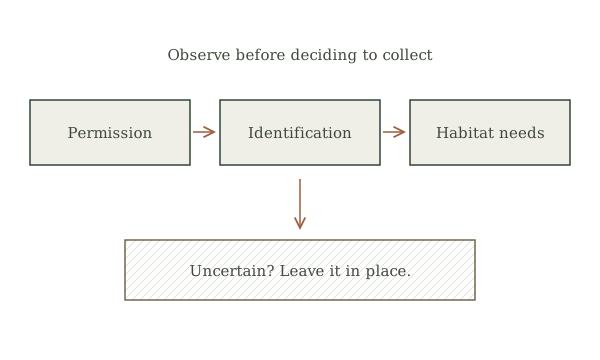
- Avoid unidentified or toxic plants and metal-salt mordants. Use dedicated equipment, gloves and ventilation for product-directed dyeing; never reuse dye vessels for food.
Work carefully, in order
The method
- 01
Choose a harmless test
Select a known commercially supplied dye material and an expendable swatch whose fiber is identified. Read the supplier's directions for that fiber and do not substitute wild plants or unknown mordants.
- 02
Label a control
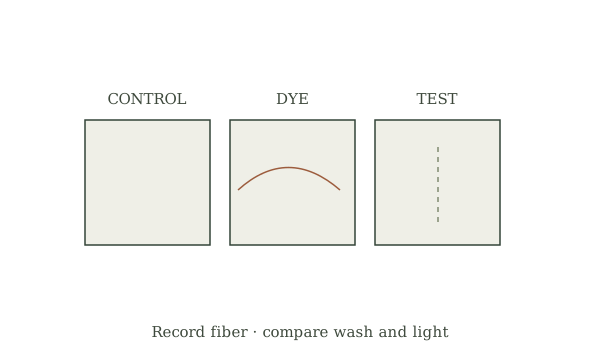
Keep one undyed scrap beside the test swatch. Label fiber, material, preparation and date so you can compare the result after drying and later exposure.
- 03
Prepare a small dye bath
Follow the supplier's instructions in a dedicated non-food vessel. Keep children and pets away, avoid splashes and handle heated liquid only if the product calls for heat and you can do so safely.
- 04
Color and rinse the swatch
Use the supplier's contact time and rinse method. Dry out of direct sunlight. Observe the dry color rather than assuming the wet bath predicts the final shade.
- 05
Test and document limits
Compare a small washed sample with an unwashed one and a light-exposed sample with one kept dark. Record bleeding or fading before considering any full garment project.
Mistakes to avoid
- Expecting the dye bath to match dry fabric
- Assuming all fibers take color alike
- Using unknown plants or household cookware
If it isn’t working
Color washes out
Check the supplier's fiber and pretreatment requirements; a stronger bath alone may not fix poor binding.
Shade fades in light
Record the loss and protect the material from strong light; choose a documented colorfast process for a durable item.
Then & now
Historical Method — Modern Safety Practices Differ
Historical context
Historical Method — Modern Safety Practices Differ. Textile dyers used many plant, insect and mineral colorants, often with mordants. Historic metal salts and unknown plants are not casual household ingredients.
The modern equivalent
Commercial fiber-specific dyes offer documented application and fastness guidance.
Sources & review
Editorial draft — specialist review pending. Written 2026-09-29. Sources support the stated scope; this page has not been professionally certified.
- National Park Service — Curatorial Care of Textile Objects ↗
Natural dye and mordant variability as textile background. Checked 2026-09-29.
- Canadian Conservation Institute — Basic care of textiles ↗
Light exposure and care limits of dyed textiles. Checked 2026-09-29.