Why it matters
Fresh cheeses differ by acidification, culture, curd handling and moisture. A familiar name such as ricotta or farmer cheese does not establish one universal recipe or storage life.
What you’ll need
Tools
- Food thermometer
- Nonreactive pot
- Clean strainer
- Clean storage container
Materials
- Pasteurized milk matching the selected recipe
- Its specified coagulant or acid
Before this skill
- Kitchen Hygiene
- Handling Milk and Chilled Dairy
Before you begin
Safety & limits
- Use a complete product-specific university extension recipe; this overview does not prescribe acid amounts or heating schedules.
- Fresh cheese remains perishable. Avoid raw milk and do not infer safety from draining, salting, taste or appearance.
Work carefully, in order
The method
- 01
Name the product
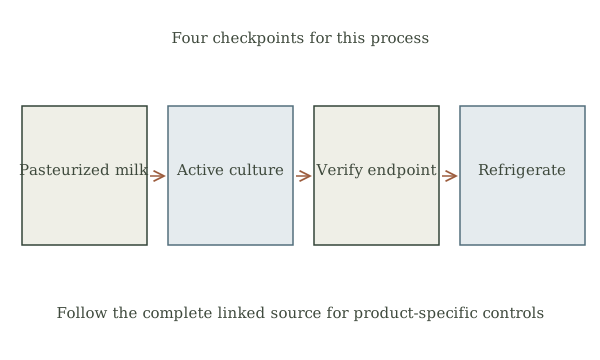
Choose one fresh cheese and the complete linked Penn State recipe or another current extension process. Check whether ordinary pasteurized milk is suitable and whether the product needs culture, rennet, acid or another ingredient.
- 02
Prepare a clean workspace
Wash hands and equipment, read the full sequence, and measure the specified ingredients. Keep milk refrigerated until the process starts and use clean contact surfaces throughout.
- 03
Follow curd instructions
Use the recipe’s heat, acidification, separation and draining steps without swapping product names or deciding by appearance alone. Record any deviation rather than trying to normalize it afterward.
- 04
Chill and use as directed
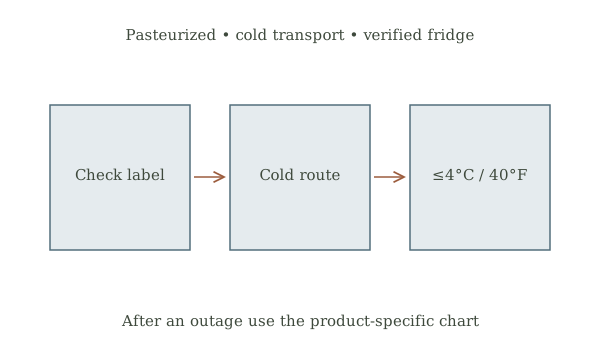
Transfer to a clean container, label the batch and promptly refrigerate under the selected product guidance. Do not present this as a method for aged cheese or shelf-stable preservation.
Mistakes to avoid
- Using a generic vinegar amount for every milk or cheese.
- Confusing ultra-pasteurized with ordinary pasteurized milk without checking the recipe.
- Letting moist cheese drain or sit warm without a source-directed limit.
If it isn’t working
Curds do not form
Check milk processing and ingredient compatibility with the selected recipe; do not repeatedly add acid by guesswork.
The cheese was left out or its handling is unknown
Follow current perishable-food discard guidance rather than tasting for reassurance.
Then & now
Historical context
Soft curd cheeses were prepared close to milking and eaten fresh. Current recipes make their ingredients, equipment, sanitation and refrigeration explicit.
The modern equivalent
A named, tested fresh-cheese recipe and appliance thermometer improve repeatability while preserving the short cold-storage context.
Sources & review
Editorial draft — specialist review pending. Written 2026-09-24. Sources support the stated scope; this page has not been professionally certified.
- Penn State Extension — Home Cheesemaking ↗
Choosing a fresh cheese recipe, milk, utensils and sanitation. Checked 2026-09-24.
- FDA — The Dangers of Raw Milk ↗
Raw-milk pathogen risks; use pasteurized dairy for these introductory guides. Checked 2026-09-24.
- FoodSafety.gov — Four Steps to Food Safety ↗
Clean preparation and prompt refrigeration of perishable foods. Checked 2026-09-24.